Archive

Archive for the ‘Art 356 Demos’ Category

Is your type format True, Open or ’script?

September 12th, 2008 admin No comments

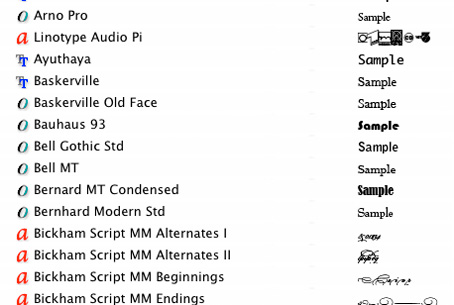
Font type icons


When you select a font in InDesign® from the font menu, check the icons to the left of the font’s name. The icon is there to let you know the type format. The O indicates OpenType fonts, the TT is for TrueType fonts and the red a is for PostScript fonts. Get to know the advantages of each format.

Where’s my Glyph? It was just here!

September 9th, 2008 admin No comments

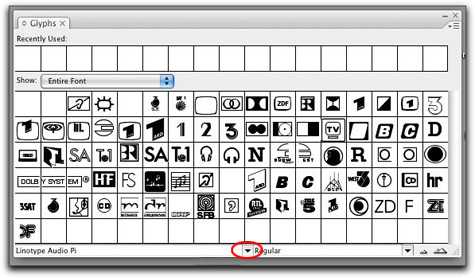
Menu from InDesign\'s Glyph keyboard mapOnce you explore all of the characters in your favorite type face or font, you may want to see what else is hidden in the keyboard map for the font. For example, how many times have you wondered were the © symbol is located, or where the ® symbol for registered product names? Better yet, you may have the need to check out the full keyboard map for a glyph or symbol font like Zapf Dingbats or Carta. Glyph fonts like these are  only a few of the available fonts to you in the lab. Alternative type characters or glyphs can be hard to find. Luckily inside of InDesign and Illustrator you can easily find a map of the keyboard layout. InDesign’s Glyph menu can be found by going to the top menu bar > find Window> scroll down to Type & Tables > then down to Glyphs. A window like the one above will appear. Select the font you want to see by clicking on the small arrow that is circled in red.

How to Make a Leather Journal

July 14th, 2008 admin 7 comments

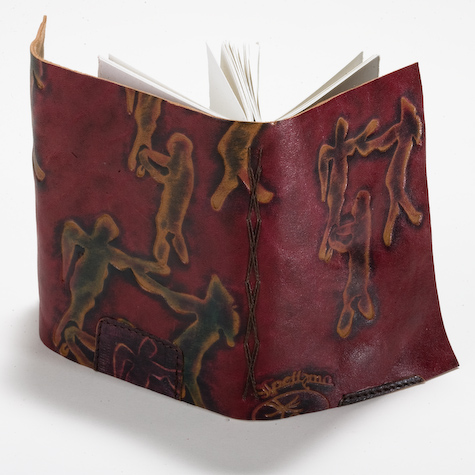
Danika Morphew-Tarbuck gave a demo to the class to teach us how to sew a leather wrapper around two signatures of drawing paper. Below is a photo of a sample that she created.

sample of finished journal

Danika used leather from a purse that she bought at a thrift store to use as the cover. Heavy weight drawing paper was used for the journal pages. She said sewing is easier if you use waxed linen thread. You will need two needles to sew this book.

Step by step photos can be seen by going to the Read more >. Read more…

Free trial of Adobe Lightroom v.2 Beta

April 15th, 2008 admin No comments

In class, we discussed using Adobe CS3 Automated Web gallery creator script in Photoshop and Bridge. As I mentioned, you can use many programs to automatically generate web galleries from your image files. In my next post, I will list other programs. A program that I have been using for over a year is Adobe Lightroom. By far, this is one of the fastest ways to generate web galleries. Last week Adobe release a free Beta version to Lightroom version 2. You can download a copy from this link. You will need to create an account and agree to license terms. Once you do, you will see a link for a copy of the beta for Macintosh and for Windows machines. You may not have interest in the digital photo processing procedures of Adobe Lightroom, but while the Beta version is operational, you will have some very attractive web templates, that can be created easily. Let me know if you have questions or problems with the download or install.
Categories: Art 356 Assignments, Art 356 Demos Tags:

Free training videos for Adobe CS3

March 10th, 2008 admin No comments

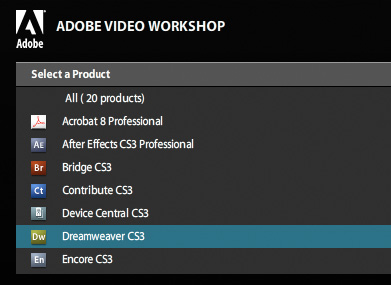
Adobe Video Workshop page

I was searching for an answer to a question for a problem in InDesign and I discovered free training videos on the Adobe site. Go to Adobe Video Workshop On the top of the left column is the a list of training videos called Adobe Video Workshop. Let me know if you have any questions.

Connecting to the class server

February 8th, 2008 admin No comments

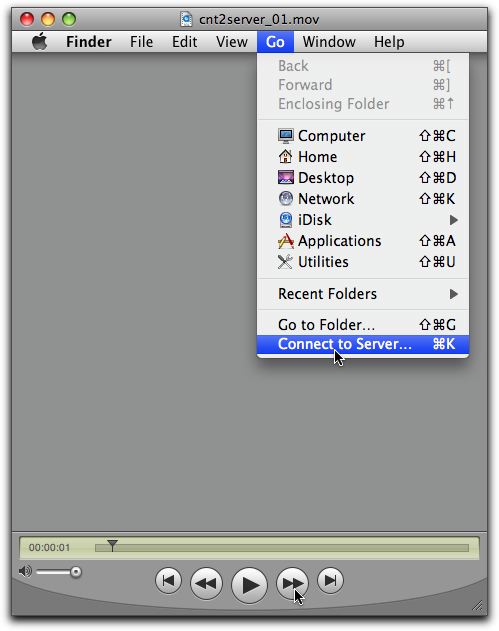
connecting to server

Watch this video to learn how to connect to the class server from your Apple computer.

Mac OS Font Book

February 7th, 2008 admin No comments

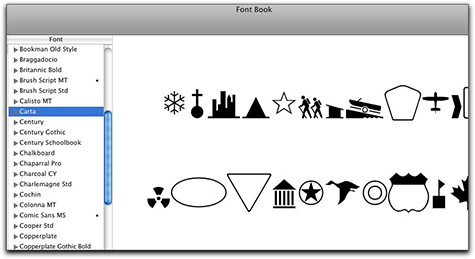
Font Book sample

Are you familiar with the Font book application in the Mac OS? Go to your Applications folder > look for the Font Book application> and launch it.

The second column from the left is a list of all installed fonts on your computer. Scroll the mouse over to the font column and select one. You can see the full layout of the typeface. As you scroll down the list of fonts you will dixcover that some fonts are mostly symbols. As you work on your website and digital glossary, you might want to spend time scanning through the many font options that are on the computer. We have many more fonts on the server. I sent you a link to a tutorial showing how to log on to the class server and how to add fonts to your computer workstation. Check your email.

Dean gets an A’daBoy

February 7th, 2008 admin No comments

Your classmate Dean found this free FTP program. Say it with me – IT IS FREE – But it installs only on Firefox. Copy and paste this link using FIREFOX not Safari

https://addons.mozilla.org/en-US/firefox/addon/684

Then hit the INSTALL button It will install it in your FireFox brower. I will add a shot tutorial to configure it soon. That way it may be easier to add files to your web space.

Photoshop layer masking demo

February 5th, 2008 admin No comments

link to video

If you use Adobe Photoshop, you might find this on line video tutorial of interest. Follow this link to a video by Matt Kloskowski. The series is part of the on line videos by Peachpit Press. The link that takes you to the video is at the bottom and is called Layer Masking 101 Tutorial.

Setting up your web space

January 28th, 2008 admin No comments

These photos illustrate how to set up your web space at the School of Education web space. Check your email for the url, user name and password.

Step one – Load Dreamweaver and go to the Site menu and scroll down to the new site selection.

Step two – You can title your site any name that you like. This is simply the file name, it is not the web site name. Type in the web address that is in your email where it says “What is the HTTP address of your site?” Select “Next”

Step three – Select no for using server technology and then Select “Next” at the bottom of the window. Select “Next” at the bottom of the window.

Step four – Select “Edit Local copies on my machine” for this step. The second window is asking you for a location on your computer to store your files. Click on the folder icon that is located on the right side of the window and navigate to a location of your choice. Select “Next” at the bottom of the window.

Step five – Fill in these sections with your information. In the top window select FTP as your choice. Use the user name and pass word that was given to you, not your UW net id. You can hit the “Test connection” button to see if it connects with the server. Then Select “Next” at the bottom of the window.

Step six – Selected “No, do not enable check in and check out”. Select “Next” at the bottom of the window.

Step seven – Select done.