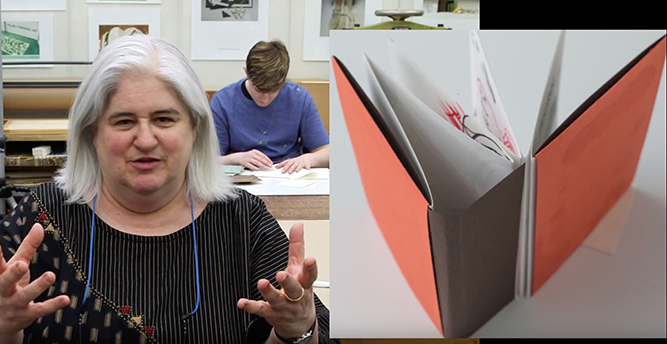
Cartonera artists from Cartonera Mexico, Elsoisa Cartonera and YiYi Jambo visited to make work in out type lab on Friday, October 9, 2009. You can see a gallery of photographs of the Cartonera book artists during the energetic and chaotic event. These book artists and publishers were in town as part of the Cartonera Publishers Conference and the Wisconsin Book Festival.
October 1, 2 & 3 Drew Cameron, Robert Possehl and Drew Matott conducted a workshop for veterans as part of the Combat Paper project. You can learn more about the efforts at the Combat Paper Organization site. A link of photographs can be viewed from the Combat Paper workshop.
This calendar can be used to see if the beater room has been reserved. You can also use it to reserve any of the beaters. Please list the time and the beater that you want to reserve. jim
This calendar should be used to reserve the beater room.
For those of you wanting to learn about Search Engine Optimization, aka SEO, Photoshelter, a great photo hosting service, has an SEO Cookbook with excellent information to learn how to get found on the net. Get the Photoshelter SEO Cookbook here. Download this information and read it.

The first day we will meet in 6451 Humanities to review the course. The remainder of the four weeks we will meet in Room 1009 of the Art Lofts, the location of the new paper lab. See you soon.
One of the most common questions that I get is “What type of thread is best for binding my book?”
The two suppliers that I use most often for binding thread are Colophon Book Arts Supply and Talas. However, many many vendors sell thread for bookbinding. I have used silk button thread for a small book, since it was the only thread that I could find in the color that I wanted. The photo above shows types of thread most commonly used to sew books. The photo illustrates that binding thread is sold in different sizes. The second number 3, 5 and so on, indicates the number of strands that are wound together to form the thread. The first number indicates the thickness. Therefore thread that is labeled 25/3 is thinner than 18/3. Most often I use 16/3 or 18/3. But every project varies and I seldom ever say one size fits all. It is best to have a variety of size and colors on hand. I am not real sure how vendors determine the first number. My best guestimation is that it relates to the length of thread need to equal a set amount of weight. I am not sure where along the way I heard this. Perhaps you can let me know the best answer.
It is easy, just watch this very short animation. Set the type upside down or “wrong reading” Click here if you have trouble getting the video to play.

Over a year ago, students in my Art 356 Print Production class designed layouts for a tutorial hand-out on Pressure Printing, also known as Stratography.
Tracy Honn provided the text from a hand-out that she used at a conference. I took photos of Carol Parker’s book that she created when she was in graduate school along with the original plates. Tracy Honn and Sarah Noreen printed a demo for photographs at the Silver Buckle Press. Two solutions are available for download. Alyssa Grabski’s solution is here. A link to Meg Neuville’s is here. Let me know if you have any questions.
February 11th, 2009
admin
Poet, writer and filmmaker Jimmy Santiago Baca met with students and staff at the Multicultural Center at the University of Wisconsin-Madison recently. The focus of the meeting was to discuss how to build unity and increase awareness for Latino students. It was a pleasure to see such a well know writer and activist meet with students. You can see a photograph of Jimmy Santiago Back .
You may know that I created an account for the Art 356 class on the delicious.com site. You can see lots of sites that are related to the class. Also, please post websites that you interesting for other classmates. To post to the art 356 account go to delicious.com/post and tag the site. Let me know if you forgot the login name or password.